What this source is
This is a source dossier on T. Henry Moray and his claimed "radiant energy receiver" — a device said to draw usable electrical power from an ambient field using an antenna, a ground connection, and a special solid-state detector that the source calls the Moray valve. The dossier is hosted at the archive path moray2/morayrer.htm and is assembled from patent-style drawings, photographs of the device and of demonstrations, a circuit diagram, and a detector diagram.
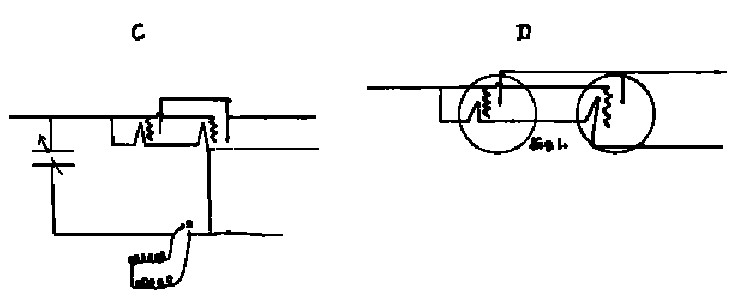
The dossier is an image-and-drawing archive, not a technical report. It is not a peer-reviewed paper, not a laboratory report, and not an independent replication. Its substance is visual: drawings and photographs presented as the record of the device. Nothing in the source provides a measured power output, a calorimetric energy balance, a test protocol, or a third-party verification.
This distinction matters for how the page should be read. The dossier documents that Moray and his device were publicized and that drawings and photographs of them exist. It does not establish that the device produced net power. See Patent as Evidence for the general pattern of treating drawings and photographs as proof of function.
The claim, as the source frames it
Attributed to the source and to Moray's own account — not established here:
- A receiver collects energy from an ambient field the source calls radiant energy, distinct from ordinary electromagnetic radiation.
- The front end is an antenna with a ground connection.
- A special detector — the Moray valve — rectifies or converts the received energy into usable current. The source describes this element in semiconductor-like terms.
- The active material inside the detector is a mineral the source names "Swedish stone" (also rendered as "Swedish rock").
The dossier presents the device through its drawings and photographs rather than through measurements. There is no stated output figure, no load characterization, no efficiency calculation, and no accounting of where the energy is said to come from.
What the dossier actually contains
The source is a set of images. The named items in the dossier are:
| Item | Type | Role |
|---|---|---|
patdraw1.jpg |
Patent-style drawing | Drawing of the claimed device |
patdraw2.jpg |
Patent-style drawing | Drawing of the claimed device |
1moray.jpg |
Photograph | Portrait/device photograph associated with Moray |
1rer1.jpg |
Photograph | Photograph of the claimed receiver |
demo1.jpg |
Photograph | Photograph of a demonstration |
1circuit.jpg |
Circuit diagram | Schematic of the claimed receiver |
semicond.jpg |
Diagram | Diagram of the claimed detector ("semiconductor") |
1detctor.jpg |
Photograph | Photograph of the detector |
These are the whole of the dossier's content. There is no accompanying text in the source that supplies power figures, dates, patent numbers, or test conditions. Where the wiki records a claim about the device, it is recording what the dossier's framing asserts, not what the dossier demonstrates.
How the claim is said to work
The mechanism, as the source presents it, has three parts:
- Collection. An antenna and ground system couple to the claimed ambient radiant-energy field.
- Detection. The Moray valve — described in the source as a semiconductor-like element built around "Swedish stone" — converts the collected energy into a usable form.
- Output. The converted current is said to be available to drive a load.
Each step is asserted through drawings and diagrams. None is accompanied by instrumentation data. The circuit diagram (1circuit.jpg) and the detector diagram (semicond.jpg) show topology, not performance; a schematic can be drawn for a device that does not work, and a photograph can be taken of a device that does not work. See Radiant Energy Receiver Claim and Moray Valve for the mechanism claims treated as claims.
Evidence quality and limitations
- No measured output. The dossier reports no wattage, no voltage/current curves, no load tests.
- No calorimetry or energy balance. There is no attempt to show that output exceeds any conventional input, which is the crux of any "radiant energy" or over-unity claim.
- No independent replication. No third party is reported to have built and tested the device.
- No test protocol. No method is given by which the claimed function could be checked.
- No peer-reviewed report. The record is drawings and photographs.
- Attribution risk. The wiki already holds several distinct anomalous-energy claims — Over-Unity Magnetic Motor Claim (Aspden) (Aspden), the Bedini motor-generator claims, and the E-Cat nickel–hydrogen claim. Moray's radiant energy receiver is a different claim about a different device by a different inventor. The specifics of those other claims must not be transferred here, and Moray's specifics must not be transferred to them.
The dossier's own framing — patent drawings plus demonstration photographs — is in tension with any claim of demonstrated function. Drawings and photographs are consistent with a patent-and-press dossier; they are not evidence of net power.
Structured data
The source contains no SQL DDL, schema definitions, API signatures, or configuration tables. There is nothing of that kind to preserve verbatim.
Related work and context
- the source archive — the archive that hosts this dossier; this is another instance of its inventor-dossier pattern.
- Patent as Evidence — the reading pattern this dossier exemplifies.
- Moray's Radiant Energy Receiver: Reported Figures, the Germanium Valve and the Twenty-Point Duplication Test — the claims-vs-evidence comparison for this dossier.
- energy — the topic guide under which this dossier sits.
- Aspden Claims vs. Evidence: The Index Dossier Without Data, E-Cat Claims vs. Evidence: The Dossier's Documents and the Absence of Independent Replication, Bedini Claims vs. Evidence: The Patents, the Inventor's Disclaimers and the Absence of an Energy Balance — the same comparison pattern applied to other, distinct anomalous-energy claims.
Open questions
- Does the source contain any textual claims (power figures, dates, patent numbers) beyond the images? If so, they should be captured verbatim.
- Should "Swedish stone" get its own page, or is it too thinly described in this source?
- Is there a specific Moray patent number to record as an entity page, following the existing patent-entity pattern?
Source notes & attribution
- Rex Research dossier, moray2/morayrer.htm (native source: rexresearch/f606294ebddae108.md ). Images: patdraw1.jpg , patdraw2.jpg , 1moray.jpg , 1rer1.jpg , demo1.jpg , 1circuit.jpg , semicond.jpg , 1detctor.jpg .
- https://rexresearch.com/moray2/morayrer.htm