This source dossier collects material on a claimed biomimetic route to regrowing human tooth enamel. It is a short, link-and-abstract compilation rather than a technical report: one peer-reviewed paper abstract, one social-media/press summary, one adjacent laboratory news item, one researcher profile link, and four patent documents. The dossier's own framing names "Shuo CHEN / Abshar HASAN," but the underlying paper is attributed to "Abshar Hasan, et al." — a discrepancy the source never resolves.
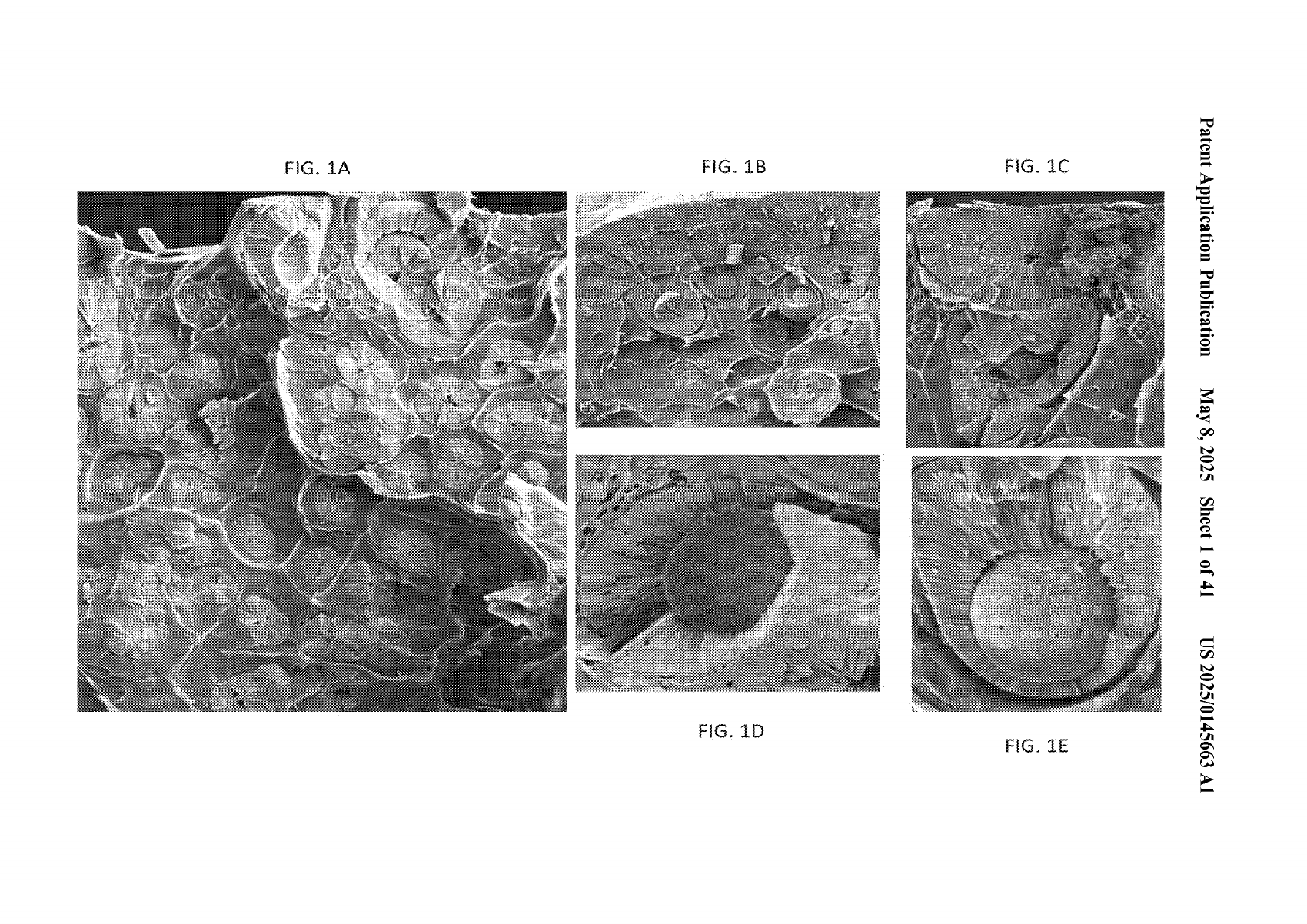
US patent publication; document page 2. Rotated for reading.
The subject matter is genuinely interesting: dental enamel is a hierarchical apatite nanocomposite that the human body cannot regenerate, and the paper claims to restore its microstructure and mechanical properties with an engineered protein matrix. What the dossier does not contain is any primary data — no figures, no methods, no sample sizes, no statistics. Everything below is therefore reported at the level of abstracts, press prose and patent claims.
What enamel is, and why it does not come back
The Nature Communications abstract reproduced in the dossier states the biological premise directly: tooth enamel "is characterised by an intricate hierarchical organization of apatite nanocrystals that bestows high stiffness, hardness, and fracture toughness." That hierarchy — nanoscale apatite crystals arranged into rods and then into woven microscale architectures across different anatomical regions of the enamel layer — is what gives enamel its unusual combination of hardness and crack resistance.
The same abstract states the clinical problem: "enamel does not possess the ability to regenerate, and achieving the artificial restoration of its microstructure and mechanical properties in clinical settings has proven challenging." Enamel is acellular and, once formed by ameloblasts during tooth development, is not renewed. Existing restorative dentistry replaces lost enamel with synthetic materials rather than regrowing it. See Dental Enamel for the material's structure and its non-regenerative character.
The claimed mechanism: an elastin-like protein matrix that templates apatite
The core claim of the paper, as quoted in the dossier, is that the authors "engineer a tuneable and resilient supramolecular matrix based on elastin-like recombinamers (ELRs) that imitates the structure and function of the enamel-developing matrix."
The logic is biomimetic: during natural enamel formation, a protein-rich organic matrix (dominated by amelogenin) organizes and templates the deposition of mineral. The authors' engineered matrix is intended to stand in for that developmental matrix. When "applied as a coating on the surface of teeth exhibiting different levels of erosion," the abstract reports, "the matrix is stable and can trigger epitaxial growth of apatite nanocrystals, recreating the microarchitecture of the different anatomical regions of enamel and restoring the mechanical properties."
Two terms carry most of the technical weight here:
- Elastin-like recombinamers (ELRs) — engineered, sequence-defined protein polymers, described in the dossier only as the basis of a "tuneable and resilient supramolecular matrix." See Elastin-like Recombinamers (ELRs).
- Epitaxial growth — oriented crystal growth in which new apatite nanocrystals align with the existing mineral substrate, which is the mechanism by which the treatment is claimed to recreate enamel's directional microarchitecture rather than depositing a random mineral layer. See Biomimetic Enamel Mineralization.
The abstract closes by claiming "translational potential of our mineralising technology for treating loss of enamel in clinical settings such as the treatment of enamel erosion and dental hypersensitivity."
The press summary: a different mechanism and a timeline
The dossier also reproduces a LinkedIn post (attributed to a "jbecher") headlined "New gel repairs and rebuilds tooth enamel with natural growth." This summary makes two claims that do not appear in the quoted abstract:
- A saliva-ion mechanism. The gel "extracts calcium and phosphate ions from saliva to encourage new growth of minerals," and "these minerals then merge with the existing tooth."
- A timeline. "Lab experiments showed that a thin, protective layer formed within just weeks of applying the gel to extracted human molar teeth."
Both should be treated as press-level claims. The abstract speaks of a stable matrix triggering epitaxial apatite growth; it does not describe ion extraction from saliva, nor does it give a "weeks" timescale. The dossier provides no data behind either statement. This is the same pattern documented elsewhere in the archive — see Patent as Evidence and the parallel Enamel Regrowth Claims vs. Evidence: The Press Summary, the Abstract and the Patent Text.
Adjacent work: PNNL and amelogenin ribbons
A third item in the dossier is a Pacific Northwest National Laboratory publication page, "How Proteins Form Tooth Enamel." It describes work published in PNAS from "an international collaboration between Pacific Northwest National Laboratory (PNNL) and University of Washington scientists," studying "how recently identified amelogenin ribbons interacted with an amorphous mineral precursor of apatite." The page states that "protein ribbons are highly active scaffolds for apatite formation."
This is separate background research, not a result of the Hasan et al. paper. It is relevant because it concerns the same biological actors — amelogenin, an amorphous apatite precursor, templated mineral formation — but the dossier gives no indication that the two groups are connected, and their findings should not be merged. The PNNL item is useful chiefly as context for why an amelogenin-like templating strategy is plausible in the first place.
The patent family
Four patent documents are listed. They describe different materials from the ELR matrix of the paper, and their claims should not be transferred onto the paper's results.
US2025145663A1 and US2024301032A1 — Substrates comprising elastin-like polypeptides and calcium ions
These two applications share a title and abstract and appear to belong to the same family. The dossier quotes the disclosure as directed to "polypeptide substrates and methods of synthesis thereof," which "can be embedded with calcium ions from a number of ionic sources." The calcium-embedded substrates "can be used to grow a variety of crystal structures including flower-shaped, onion-shaped, and needle-like crystal structures," and the disclosure is "additionally directed towards methods of crystal growth from polypeptide substrates." The stated scope is broad: "Compositions of the disclosure can be used in a wide variety of medical and other applications."
Note the scope difference: the patent claims generic polypeptide-templated crystal growth across multiple morphologies and applications, whereas the paper reports enamel restoration specifically. See US2025145663A1 — Substrates Comprising Elastin-Like Polypeptides and Calcium Ions and US2024301032A1 — Substrates Comprising Elastin-Like Polypeptides and Calcium Ions.
CN109288685A — Amelogenin-induced fluoro-calcium silicate biomimetic mineralization
This Chinese application claims a method in which "fluoro-calcium silicate in mineralizing solution is induced by the amelogenin to form a biomimetic mineralization material." It invokes "the self-assembly capacity of the amelogenin" and uses fluoro-calcium silicate "as an inorganic bioactive material in the biomimetic mineralizing solution to build nano-sized and micron-sized biomimetic hard tissue mineralization layers." The claimed result is that the formed layers are "superior to mineralization layers formed by pure inorganic ceramic bioactive materials," with "grain crystals... orderly arranged and grow in an orientated manner along a sizing shaft to form a nano-apatite grain crystal structure similar to bones and teeth."
This is an amelogenin system, not an ELR system. See CN109288685A — Amelogenin-Induced Fluoro-Calcium Silicate Biomimetic Mineralization.
US2018236130A1 — Amelogenin-chitosan hydrogel for dentin hypersensitivity
This application claims "a method to regrow a protective layer over exposed/demineralized dentin." The remineralization composition comprises "an amelogenin and derived peptides, a chitosan, water, and a sufficient amount of a pH adjusting component such that the composition has a pH greater than about 6.0," with the result that "dentinal tubules are occluded with apatite crystals and enamel is regrown on the dentinal tubules."
Again this is an amelogenin/chitosan carrier system, distinct from the ELR matrix. See US2018236130A1 — Amelogenin-Chitosan Hydrogel for Dentin Hypersensitivity.
Evidence assessment
The dossier's evidence ceiling is low, and it is worth stating plainly:
- One peer-reviewed anchor, abstract only. The Nature Communications paper (volume 16, article number 9434, 2025) is the only peer-reviewed primary source quoted, and only its abstract is reproduced. No figures, methods, sample sizes, controls or statistical results appear in the dossier.
- A press summary that adds unsupported specifics. The saliva-ion mechanism and the "within just weeks" timeline come from a LinkedIn post, not the paper.
- Patents are claims, not validation. The four patent documents describe compositions and methods; patent text is not evidence of efficacy, and the dossier supplies no test data for any of them.
- Adjacent work is not the same work. The PNNL amelogenin-ribbon study is a separate collaboration and should not be read as corroboration of Hasan et al.
The strongest defensible statement from this dossier is: a 2025 Nature Communications abstract reports that an elastin-like recombinamer matrix, applied as a coating, triggered epitaxial apatite growth and restored enamel mechanical properties in laboratory tests, with claimed translational potential for enamel erosion and dental hypersensitivity. Everything beyond that is press framing or patent language.
Authorship and attribution caveats
- The dossier title names Shuo Chen and Abshar Hasan, but the paper is attributed to "Abshar Hasan, et al." The source does not establish Shuo Chen's role in the paper as distinct from the patents. Chen is linked only to a ResearchGate profile at The University of Texas Health Science Center at San Antonio. See Shuo Chen and Abshar Hasan.
- The paper's ELR matrix and the patents' amelogenin- and amelogenin/chitosan-based systems are different materials. Claims must stay attached to the document that makes them.
- The dossier gives no institutional affiliation for Hasan, and no author list beyond "et al."
Related work in this archive
The dossier sits in the same thematic neighborhood as the archive's bone-repair cluster — Bone Adhesive (Bio-Glue), Decellularized Extracellular Matrix Scaffold and Osteoclast-Targeting Nanomaterials — which shares the "biomimetic matrix plus mineral" logic but targets bone rather than enamel. It also parallels templated-mineral-precipitation work such as Microbially Induced Calcite Precipitation (MICP) and Bio-Cementation, where an organic or biological template directs inorganic crystal growth. These are conceptual parallels, not shared results.
Source notes & attribution
- Rex Research dossier: https://rexresearch.com/ChenHasanToothRegeneration/ChenHasanToothRegrowth.html
- Hasan, A., et al. "Biomimetic supramolecular protein matrix restores structure and properties of human dental enamel." Nature Communications 16, 9434 (2025). https://www.nature.com/articles/s41467-025-64982-y
- LinkedIn post (jbecher), "New gel repairs and rebuilds tooth enamel with natural growth." https://www.linkedin.com/posts/jbecher_biomimetic-supramolecular-protein-matrix-activity-7395213882195218432-0LMo
- PNNL, "How Proteins Form Tooth Enamel." https://www.pnnl.gov/publications/how-proteins-form-tooth-enamel
- Shuo Chen, ResearchGate profile. https://www.researchgate.net/profile/Shuo-Chen-6
- US2025145663A1 / US2024301032A1 — Substrates comprising elastin-like polypeptides and calcium ions.
- CN109288685A — Method and application for inducing fluoro-calcium silicate biomimetic mineralization based on amelogenin.
- US2018236130A1 — Amelogenin-chitosan hydrogel for dentin hypersensitivity.
- https://rexresearch.com/ChenHasanToothRegeneration/ChenHasanToothRegrowth.html