Living mineral systems
When microorganisms become part of a construction process.
Start here / 4 minute read
Microbially Induced Calcite Precipitation
What this source is
This is a source dossier on microbially induced calcite precipitation (MICP), a bio-mediated mineralization process in which microbial metabolism drives the precipitation of calcium carbonate (calcite, CaCO₃) within a granular medium. The dossier is hosted at the archive path MicrobeInducedCalcitePptn/MICPrecipitation.html and is filed in the archive's materials-chemistry grouping.
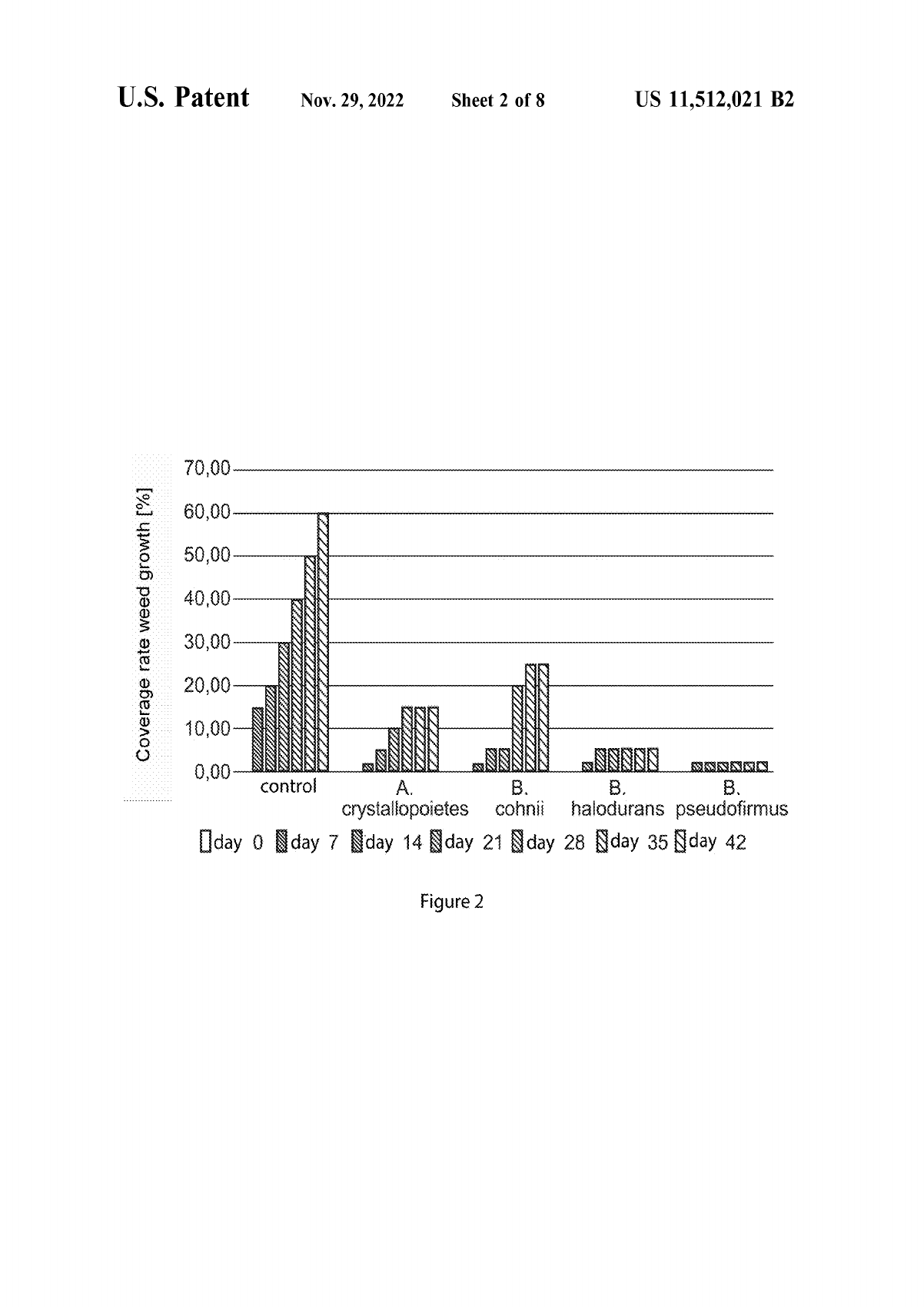
US patent publication; document page 3. Preserved page.
MICP is not a fringe topic. It is an actively researched technique in geotechnical engineering, applied microbiology and conservation science, where it is studied for soil stabilization, ground improvement, erosion control and crack healing in concrete and stone. Its placement in the source archive — a collection that mixes translated research papers, patents, press clippings and unverified claims — does not by itself raise or lower the scientific standing of the technique. The archive is a provenance record, not an authority.
Important caveat on this record
The dossier text is available and contains a mix of peer-reviewed review material, patent abstracts, a commercial company description and a Wikipedia-derived species profile. The dossier's own framing is that of an editor-led collection: it links a 2023 review in Applied and Environmental Microbiology (Carter et al., "Microbially Induced Calcium Carbonate Precipitation by Sporosarcina pasteurii"), a patent (US11512021, "Preventing or reducing plant growth by biocementation"), a company (Dust BioSolutions GmbH), several Chinese patent abstracts (CN121571451, CN121573935, CN121451579, CN121426590, CN121407588, CN121275450) and the Wikipedia article on Sporosarcina pasteurii.
Statements about MICP in this article describe the technique as it is generally understood in the published literature. Where the dossier's own framing, examples or claims differ, the dossier text is the primary record and should be consulted directly.
The process in outline
MICP works by coupling a microbial metabolic reaction to the carbonate chemistry of a pore solution. The most commonly studied route is ureolysis: ureolytic bacteria produce the enzyme urease, which hydrolyses urea into ammonia and carbamate, and the carbamate then hydrolyses spontaneously to a second ammonia molecule and carbonic acid. The net effect is a local rise in pH and in dissolved inorganic carbon, which — in the presence of dissolved calcium — drives the solution past saturation with respect to calcium carbonate. Calcite then nucleates and grows, bridging and coating the grains of the surrounding medium.
The engineering interest lies in that bridging. When the precipitation happens inside a packed sand column, a soil mass or a fracture in stone, the newly formed calcite acts as a cement, increasing stiffness, strength and resistance to erosion. Because the reaction is mediated by living organisms, the treatment can in principle be delivered as a liquid — bacteria plus a calcium-and-urea feed solution — and allowed to set in place, which distinguishes it from mechanical or grout-based ground improvement.
See Microbially Induced Calcite Precipitation (MICP) for the process as a whole, Ureolysis-Driven Carbonate Precipitation for the biochemical route, and Bio-Cementation for the engineering applications.
Why the topic matters to this wiki
The existing Bench corpus is dominated by energy, propulsion and esoteric-physics dossiers — Moray's radiant energy receiver, Coler's alleged space-energy machines, Hamel's gravitomagnetic drive, Kozyrev's time experiments, Sheldrake's morphic resonance. MICP sits apart from that cluster. It is a mainstream applied-science subject whose claims are, in principle, testable by ordinary means: treat a sand column, measure its unconfined compressive strength, measure the calcium carbonate content, compare against an untreated control.
That makes it a useful counterweight in the collection, and it also makes the archive's framing question sharper. A dossier on MICP may contain peer-reviewed results, commercial product claims, patent language, or all three mixed together. The wiki's existing Patent as Evidence concept applies directly: the presence of a patent or a commercial description in a dossier is not evidence that a treatment performs as advertised.
Limitations and unresolved questions
- Mixed evidence types. The dossier combines a peer-reviewed review, patent abstracts, a commercial company description and a Wikipedia species profile. These carry different evidentiary weight and should not be treated as equivalent.
- Patent and commercial claims are not performance evidence. The patent US11512021 describes a biocementation mixture (20.0 g/l yeast extract, 0.25 M calcium chloride, 18.0 g/l urea, 4 × 10⁸ cells/ml S. pasteurii, with optional Silicade 8 additive) and the Dust BioSolutions description reports a 34% cost advantage over the cheapest chemical spray and a 24–48 h set time. These are the dossier's own assertions, not independently verified measurements.
- Wikipedia-derived material. The physiology, metabolism, genomic and application sections are drawn from the Wikipedia article on Sporosarcina pasteurii and inherit its sourcing and any errors.
- No internal contradictions were identified in the supplied text.
Related work
- Microbially Induced Calcite Precipitation (MICP) — the process as a whole.
- Ureolysis-Driven Carbonate Precipitation — the urease-driven biochemical route.
- Bio-Cementation — soil stabilization, ground improvement and crack healing.
- Calcium Carbonate (Calcite, CaCO₃) — the precipitated mineral.
- Patent as Evidence — how to read patent and commercial claims in an archive dossier.
- chemistry and construction — the topic guides this dossier sits under.
Source notes & attribution
- Source dossier: rexresearch/529b352b6eb532b0.md , Rex Research archive, path MicrobeInducedCalcitePptn/MICPrecipitation.html .
- Archive context: Rex Research is an editor-led collection of inventor dossiers, article and patent references, and alternative-science material. See sources/main-archive and concepts/research-method for how Bench treats archive provenance.
- Dossier contents: Carter et al. (AEM 2023) review; US11512021 patent; Dust BioSolutions GmbH company description; Chinese patent abstracts CN121571451, CN121573935, CN121451579, CN121426590, CN121407588, CN121275450; Wikipedia article on Sporosarcina pasteurii .
- https://rexresearch.com/MicrobeInducedCalcitePptn/MICPrecipitation.html
Go deeper.
5 further articles2 min
Microbially Induced Calcite Precipitation (MICP)
Microbially induced calcite precipitation (MICP) is a bio-mediated mineralization process in which the metabolic activity of microorganisms raises the carbonate saturation state of a local pore solution, causing calcium carbonate (calcite, CaCO₃) to precipitate. When that precipitation occurs inside a granular medium — sand, soi
2 min
Ureolysis-Driven Carbonate Precipitation
Ureolysis is the enzymatic hydrolysis of urea, and it is the most widely studied biochemical route to microbially induced calcite precipitation. The reaction is catalysed by the enzyme urease , which is produced by a range of soil bacteria.
2 min
Bio-Cementation
Bio-cementation is the engineering use of biologically mediated mineral precipitation to bind granular materials or seal cracks. In practice it is most often the application layer of Microbially Induced Calcite Precipitation (MICP) : the same chemistry that precipitates calcite in a laboratory column is deployed to improve the m
1 min
Calcium Carbonate (Calcite, CaCO₃)
Calcium carbonate (CaCO₃) is a mineral with several polymorphs, of which calcite is the most stable under ambient conditions. It is the cementing phase produced by Microbially Induced Calcite Precipitation (MICP) and the reason that bio-cementation works.
1 min
Enzyme-Induced Carbonate Precipitation (EICP)
Enzyme-induced carbonate precipitation (EICP) is a cell-free variant of Microbially Induced Calcite Precipitation (MICP) . Instead of introducing whole ureolytic bacteria into the medium, EICP supplies the enzyme urease directly, together with urea and a calcium source. The same Ureolysis-Driven Carbonate Precipitation chemistry
The visual record.
1 archived figures · open to inspectThe source room.
Everything readable here stays on StrangewellArchived texts preserve what the source said. They may contain historical, speculative, or promotional claims; inclusion is not verification.
Source text16 min
Microbially Induced Calcite Precipitation
: HILBERTZ: BioRock .. DAVIDOVITS: GeoPolymers ... HWANG: Grancrete ... ROTTA* \ * \ **LORIA: ElectroCement ... Hydrophobic* \ *Cement ...
Supporting documents (2)
“Captured” means saved for research; a full reading guide may still be pending.
Keep following.
Thematic connections, not evidence of a shared mechanism32 / Matter & materials
DNA–silica
Molecular architecture as a route to strong, lightweight structures.
↗09 / Matter & materials
Biological transmutation
Microorganisms, radionuclides and the question of measurement.
↗33 / Matter & materials
Liquid wood
From lignin to a moldable material: process and patents.
↗