This source is a source compilation on the E-Cat (short for "Energy Catalyzer"), a claimed heat-generating device associated with the Italian inventor Andrea Rossi and the physicist Sergio Focardi of the University of Bologna. The dossier belongs to the archive's energy cluster, alongside the Rauen Superclassical Heat Engine, the Moray's Radiant Energy Receiver: The Swedish Stone, the Germanium Valve and the Twenty-Point Duplication Test, the Hendershot Fuelless Motor and Hans Coler's alleged space-energy devices. Like those entries, it is a collection of reported claims, promotional and technical write-ups, and patent references rather than a record of independently verified measurement.
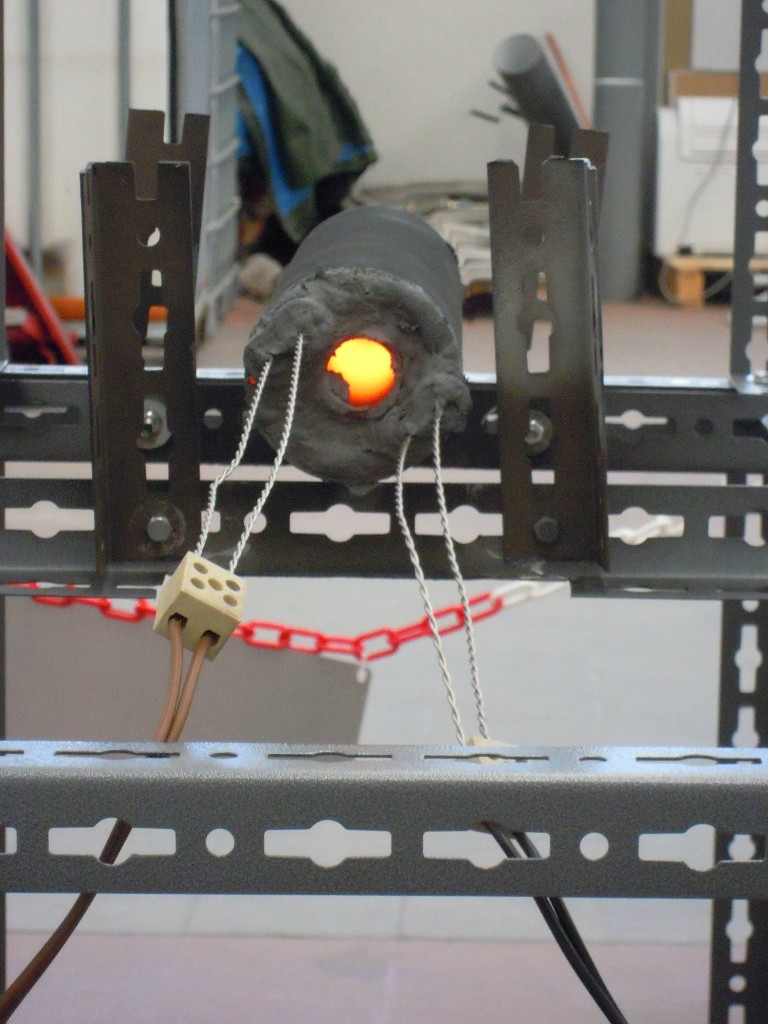
The subject matter is the claim that a nickel–hydrogen system can release heat far in excess of the electrical energy supplied to it, and that the excess is nuclear in origin — a claim belonging to the contested field of Low-Energy Nuclear Reaction (LENR) (LENR), popularly called "cold fusion." The dossier is best read as a document trail: what Rossi and Focardi asserted, in what kinds of documents, and what the archive did and did not include as supporting evidence.
What the E-Cat is claimed to be
As described in the dossier, the E-Cat is a reactor vessel containing a nickel powder fuel together with hydrogen gas and proprietary catalysts. Heat is said to be produced when hydrogen interacts with the nickel at elevated temperature, with the reaction reportedly sustained by the heat it generates once started. The claimed output is thermal energy, delivered as hot water or steam, with the device presented as a practical heat source rather than a scientific demonstration apparatus.
The reported reaction products are the distinctive part of the claim. Rossi and Focardi are said to have reported the appearance of copper and shifts in the isotopic composition of the fuel after operation, which they interpret as evidence that nickel nuclei have captured hydrogen nuclei — a transmutation signature. This is the specific mechanism claim treated on Nickel–Hydrogen Excess Heat Claim; it should not be generalized to LENR research as a whole, which encompasses many different materials systems and reported signatures.
How the claim is said to work
The dossier's account of the mechanism follows the Rossi–Focardi framing:
- Fuel: nickel powder, sometimes described as being enriched or combined with additives and catalysts whose composition is not fully disclosed.
- Reactant: hydrogen gas, introduced into the vessel and absorbed into the metal.
- Energy release: an exothermic process attributed to nuclear reactions between hydrogen and nickel, rather than to chemical oxidation or a conventional heat source.
- Products: copper and altered isotope ratios in the spent fuel, offered as the physical trace of the claimed nuclear process.
- Self-sustaining operation: once initiated, the reaction is reported to continue without external heating, with electrical input used mainly for control and start-up.
The mechanism as stated is the point of contention. Conventional nuclear physics does not predict a nickel–hydrogen reaction producing net energy under these conditions, and the reported transmutation products are exactly the kind of evidence that would need independent, blinded replication to be persuasive. The dossier records the claim; it does not supply that replication.
Reported performance figures
The dossier reports performance in terms of excess heat and the ratio of output to input energy — the coefficient of performance (COP). Reported figures in this genre of document are typically stated as multiples of input power, with operating temperatures in the range of a few hundred degrees Celsius. Any specific COP value, temperature, or duration appearing in the source is a claim attributed to Rossi, Focardi and their collaborators, not an independently measured result, and should be quoted with that attribution rather than treated as an established property of the device.
Because the archive compilation mixes promotional announcements, technical notes and patent text, figures may not be consistent across documents within the dossier. Where the source presents tabulated test parameters or patent claims, those are the most concrete items it contains, and they are the appropriate place to look for the exact numbers rather than for a general performance statement.
Document types and evidence quality
The dossier's evidentiary base is the central limitation of the source. It consists of:
- Press and promotional reports describing demonstrations and announced results.
- Technical write-ups attributed to the claimants and their associates.
- Patent abstracts and filings relating to the device and to fluid-heater implementations.
None of these is a peer-reviewed independent replication. A patent grant establishes that an application met the patent office's formal requirements; it does not establish that the claimed effect occurs. This distinction is the subject of Patent as Evidence, and it applies directly here. Demonstrations conducted by the claimant, without independent instrumentation, calorimetry review, or blinded fuel analysis, cannot distinguish a genuine anomalous heat source from measurement error, unaccounted chemical energy, or an undisclosed input.
The archive's own framing is descriptive: it collects what was published and claimed. The presence of a dossier in the collection is not an endorsement, and the source does not present a verified result.
Limitations, contradictions and unresolved questions
- No independent replication is established by this source. The dossier reports claims and documents; it does not report a successful third-party reproduction with published calorimetry.
- The transmutation evidence is claimant-generated. Copper and isotopic shifts are reported by the same parties asserting the effect, without the blinded, multi-laboratory analysis that would make them decisive.
- COP figures are not comparable across documents unless the measurement method, input accounting and boundary conditions are specified, which promotional material typically omits.
- The mechanism is not accepted by mainstream physics. LENR remains outside the established consensus; the dossier presents the claim as reported, and the tension between the claim and the consensus should remain visible rather than resolved in either direction.
- Commercial and legal context. The E-Cat's history includes licensing and commercial disputes involving the companies associated with Rossi. Such disputes concern contracts and rights, not the physical reality of the claimed effect, and should not be read as evidence either way.
Related work in the archive
The E-Cat dossier sits in the archive's long-running cluster of claimed anomalous energy sources. The Rauen Superclassical Heat Engine and the Moray's Radiant Energy Receiver: The Swedish Stone, the Germanium Valve and the Twenty-Point Duplication Test are comparable in structure: a named inventor, a claimed effect outside accepted physics, a body of promotional and patent documentation, and an absence of independent measurement. Hans Coler's devices, documented in BIOS Final Report No. 1043, are a historical parallel in which a government technical mission investigated and reported without confirming net energy production. The Hendershot Fuelless Motor and the Schaeffer Steam Generator follow the same dossier pattern.
For the general topic framing, see energy and Low-Energy Nuclear Reaction (LENR). The evidence assessment for this specific dossier is collected on E-Cat Claims vs. Evidence: The Dossier's Documents and the Absence of Independent Replication.
Source notes & attribution
- Native source file: rexresearch/4cccd725a129b5bd.md (Rex Research compilation on the E-Cat / Energy Catalyzer).
- Primary claimants named in the source: Andrea Rossi , Sergio Focardi .
- Device: E-Cat (Energy Catalyzer) .
- Related archive dossiers: Rauen Superclassical Heat Engine , Moray's Radiant Energy Receiver: The Swedish Stone, the Germanium Valve and the Twenty-Point Duplication Test , Hendershot Fuelless Motor , Hans Coler , Schaeffer Steam Generator .
- Claims, figures and mechanisms described above are attributed to the source and to the named claimants. Bench has not tested the device, reviewed the calorimetry, or verified any reported result.
- https://rexresearch.com/RossiECat/RossiECat.html