What this source is
This is the source archive dossier on Leon Sprink, an inventor whose work is filed under the heading of "electrostatic activation" of matter. The page is a compilation of patent references, patent drawings and secondary press or archive retellings rather than an experimental report. It is the primary Sprink dossier in the archive and the anchor for the Sprink material that appears elsewhere in the wiki only peripherally, most notably in the Jacques Ravatin lineage.
The dossier's organizing claim is that certain geometric forms and electrostatic or electromagnetic arrangements can "activate" space, so that chemical reactions and changes of state carried out in the activated zone proceed differently. The most concrete practical assertions attached to this are accelerated reaction times and reduced calories in industrial processes — cement clinker manufacture, lime production and saponification of fatty substances — with reported reductions such as a 24-hour reaction falling to 3 hours and a 50% saving in calories. The archive presents these claims through patent filings and press accounts; it does not present controlled measurements, replication attempts or peer-reviewed results.
Because the page mixes Sprink's own filings with the later, more elaborate framework of Jacques Ravatin, the reader must keep the two claimants separate. Ravatin cites Sprink as a predecessor, but Ravatin's cycloid and Moebius mechanisms are Ravatin's, not Sprink's, and there is no indication in this source that Sprink endorsed them.
The central claim
Sprink is reported to have found that matter placed in particular geometric and electrostatic configurations becomes "activated." The activated material is then said to exhibit altered physical behavior. For fuels, the reported effect is a reduction in consumption and a change in combustion characteristics. For water and metals, the archive describes activation effects in less specific terms.
The mechanism is never stated in the language of conventional physics in this source. There is no proposed reaction pathway, no energy balance, and no account of where the additional useful energy would come from if consumption genuinely fell. The claim is asserted through the utility language of patents and through press retellings, both of which describe what the inventor says the device does rather than what an independent measurement showed.
Patents and filings
The dossier is built around a small set of patent documents. Patent numbers are preserved here verbatim as identifiers.
- FR966735 (1950-10-17) — "Procédé et appareils destinés à exercer une influence sur les modifications d'état de la matière," the central French filing of the dossier.
- FR866491 (1941-08-14) — "Dispositif pour améliorer les réactions chimiques."
- FR762697 (1934-04-16) — "Procédé et dispositifs pour la transformation d'un liquide en vapeur et réciproquement."
- Canadian Patent 580548 (= DE 868592 = GB 685522) — "Method and Apparatus for Exerting an Influence on Reactions and Changes in the State of Matter," 1959-08-04.
The archive also reproduces material from the Ravatin lineage, including WO8000293 / EP0016079, the apparatus for amplifying emissions due to shapes. That document belongs to Ravatin, not Sprink, and is covered by EP0016079 / WO8000293 — Apparatus for Amplifying Emissions Due to Shapes and the Jacques Ravatin page.
Figures and drawings
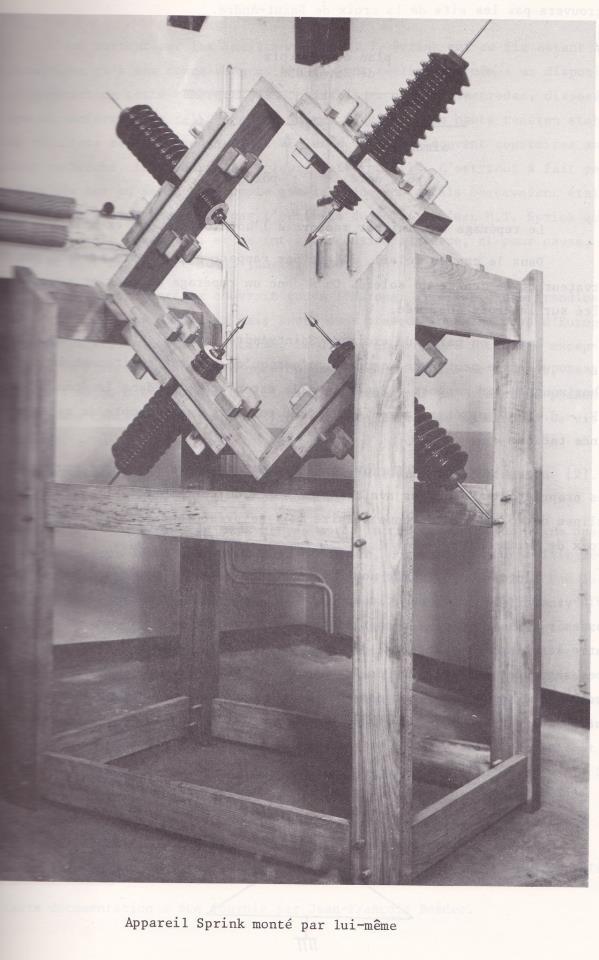
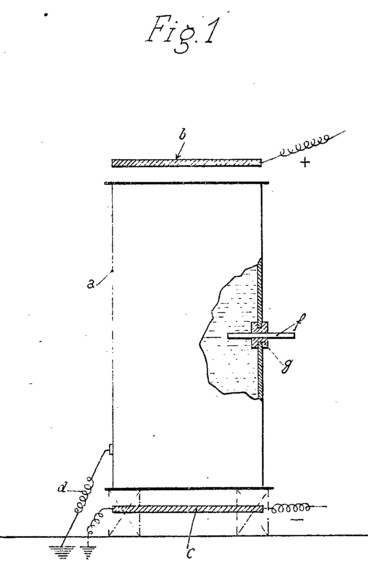
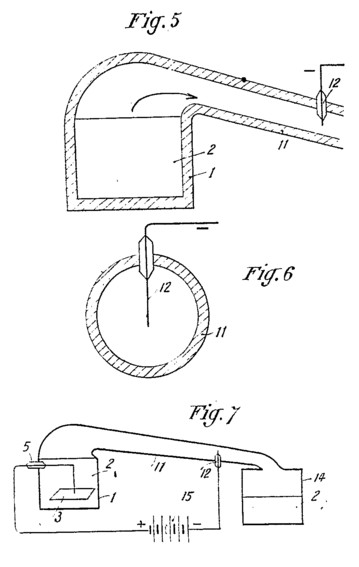
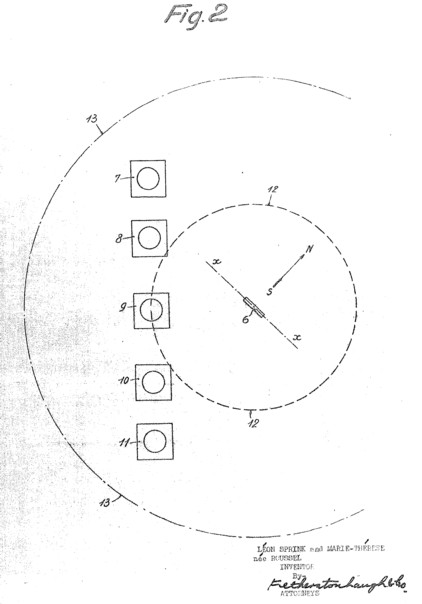
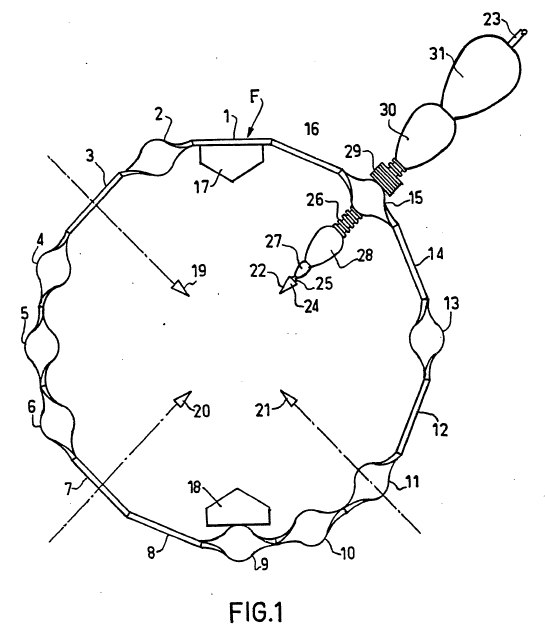
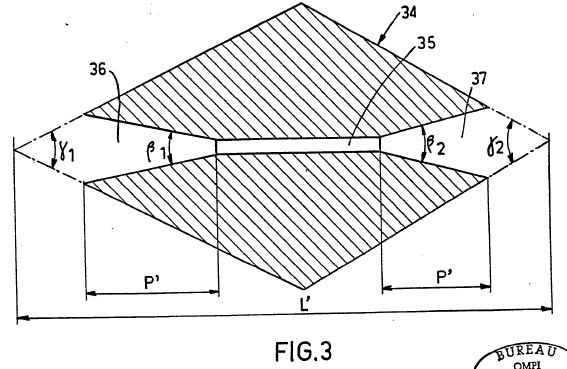
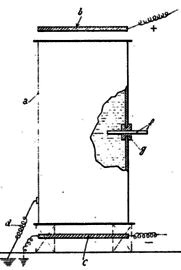
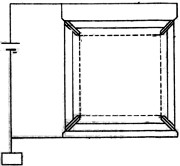
The dossier carries a portrait and a set of patent drawings and apparatus figures. These are the primary visual evidence in the source and are reproduced here with factual captions describing what each image is, not what it proves.
Evidence and its limits
The evidence base here is narrow and should be described plainly:
- Patents assert utility. A patent is a legal document that claims an invention works; it is not a demonstration that it does. The wiki's stated policy is that a patent or an archive listing is not proof of effectiveness, and that policy applies directly to this dossier.
- Press and archive retellings are secondary. The non-patent material on the page repeats the inventor's claims rather than testing them.
- No independent replication appears in the source. There is no third-party measurement, no controlled fuel-consumption trial, and no peer-reviewed result presented.
- No measurement data appears in the source. Consumption figures, if any exist, are not given here in a form that could be checked.
The claims also sit in tension with established thermodynamics and combustion science. There is no accepted mechanism by which a passive geometric or electrostatic arrangement alters the energy content of a fuel. That does not by itself settle the question of whether some measurable effect exists, but it means the burden of evidence is on the claimant, and this source does not carry that burden.
The Sprink to Ravatin lineage
The dossier documents a lineage rather than an isolated inventor. Jacques Ravatin explicitly cites Sprink as a predecessor, and the archive reproduces Ravatin's patents alongside Sprink's. Ravatin's framework adds mechanisms that Sprink's filings do not contain:
- CN Cycloid Conduits — Ravatin's conduit geometry.
- Moebius Frame Amplification — Ravatin's amplification geometry.
- Activated Glass (Microbubble Glass) — Ravatin's activated material, described as microbubble glass.
- Fluid Activation (Ravatin) — the broader theme of activating fluids, which both claimants share.
The lineage is real as a matter of citation: Ravatin points back to Sprink. It is not evidence that Sprink's claims were validated, nor that Ravatin's mechanisms are what Sprink had in mind. The two claimants' mechanisms differ and should be kept distinct. See Ravatin Claims vs. Evidence: Form Emissions, Fuel Reduction, Patent Drawings and the Absence of Independent Validation for the Ravatin-side assessment.
Related work in the archive
The Sprink dossier belongs to a recognizable family of archive claims in which a device or treatment is said to improve the efficiency or change the behavior of a fuel or working fluid, with weak or absent independent evidence. Thematic neighbors include:
- Low-Temperature Material Activation — activation of materials at low temperature.
- atmospheric-electricity-extraction — C. Earl Ammann's claimed atmospheric generator, another efficiency claim resting on press reports and an unopened artifact.
- hho-oxyhydrogen-gas — Robert Boyce's claimed oxyhydrogen generation, where a third-party finding is at least partially documented.
These are neighbors by theme, not by mechanism. A claim about one of them does not transfer to Sprink, and Sprink's claims do not transfer to them.
Open questions
- The source lists the Canadian patent as 580548 (= DE 868592 = GB 685522); the equivalence should be confirmed against an independent patent record before an entity page is created.
- Whether the Sprink "form emissions" material and the Ravatin "form emissions" material should eventually be merged into a single concept page or kept separate. The recommendation here is to keep them separate with cross-links, because the mechanisms differ and the claimants are distinct.
Source notes & attribution
- Rex Research archive dossier on Leon Sprink: rexresearch/04350b3c16476251.md (native source for this article).
- FR866491 — Sprink's core French patent.
- FR762567 — Sprink's second French patent.
- WO8000293 / EP0016079 — Ravatin apparatus for amplifying emissions due to shapes (cited here as lineage, not as Sprink's work).
- Canadian filing, figure 2 — patent number not fully legible in the source.
- https://rexresearch.com/sprink/sprink.htm