What this source is
This is a short web page on HDR Users, a site run by people who say they use the Hyper-Dimensional Resonator (HDR) (HDR). Its subject is Steven L. Gibbs, whom it calls the inventor of the device, and its main contribution is a compact account of how the hardware is said to have evolved: from an earlier machine called the Sonic Resonator, to the HDR proper in 1985, to a later revision of its Caduceus Coil.
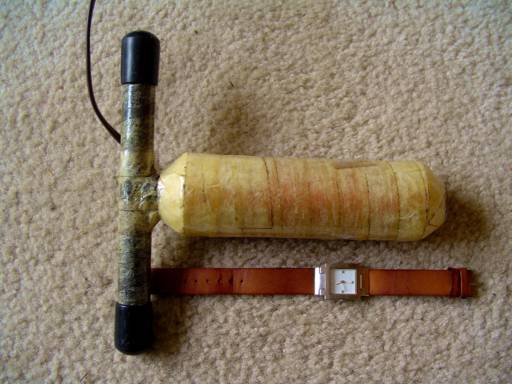
The page is written by an enthusiast rather than an investigator. Its author states that they have personally used the HDR for "time travel jumps" and to learn what the future holds, so the page is both a history and a testimonial. It cites no documents, measurements or dates beyond the 1985 origin year, and it points readers onward to Gibbs's own "time travel reports" and to a companion page on what makes the device work. It should be read as a second-hand retelling of Gibbs's own account, not as independent confirmation of it.
What the device is claimed to be
According to the page, Gibbs presents the HDR as a time machine capable of carrying a person bodily into the past or the future, not merely of producing visions or impressions. The page credits him with a claim of 10,000 time travel jumps made with it, and relays his story that two alien time travellers gave him plans for a time machine while he was a farm boy in rural Nebraska. These claims are mostly framed with hedges such as "according to him", and the page concedes that they "may seem a bit much". It offers nothing to check them against: no description of a jump, no record of what was observed, and no witness other than the author's own unspecified experience.
The page also places the device's beginnings in radionics. It suggests, with the qualifier "it seems", that Gibbs initially used the HDR as a radionics machine for healing and only afterwards applied it to time travel. Radionics instruments typically use a "witness" sample (see Witness Well) and are claimed to act on a distant target. The page reports no healing outcomes and no tests of that earlier use, and nothing here supports using such a device for any health purpose.
How the design is said to have changed
The page sketches three stages, all told from Gibbs's side.
- Before the HDR. Gibbs's first time machine is named as the Sonic Resonator. The page reports Gibbs as saying that this machine needed a bar magnet working alongside its electromagnet, but it does not say what the magnet did, and it gives no date for the device. The source archive page dates the Sonic Resonator to 1981 (see Gibbs Hyper-Dimensional Resonator (HDR): The [source note 1] Archive Page), and the original archive text, as quoted on Steven L. Gibbs, describes it as a more crude radionics machine.
- The HDR of 1985. In its own voice, the page calls the HDR an improved radionics machine and says it was much better than the Sonic Resonator. It does not explain in what respect it was better, and it says nothing about whether the HDR still used a bar magnet.
- Later revisions. Gibbs is described as unsatisfied with the original HDR and as continuing to alter it, with two aims: a stronger electromagnet and a wider zone for what the page terms the "active magnetic field". The most recent change it reports is a replacement caduceus coil of flat form, which Gibbs is said to expect will make the device more powerful. The page gives the new coil's length as 7.8 centimetres, slightly shorter than the 8.2 centimetre coil it superseded.
What the page does and does not establish
The page is useful mainly as a record of how the device's history is told within its user community. The 1985 date, the Sonic Resonator's bar magnet, the healing-before-time-travel order (which the page itself hedges) and the change from an 8.2 cm to a 7.8 cm coil are all the inventor's account as relayed by an enthusiast, not independently documented facts.
It does not establish any of the following:
- That the coil change does anything. The page gives no number of turns, wire gauge, current, field strength or measurement before and after. A 0.4 cm reduction in coil length is offered as an improvement in power with no explanation of why a shorter coil should be stronger.
- What "active magnetic field" means. The term is not defined, and no measured diameter is reported for either version.
- Any time travel. Neither the 10,000 jumps attributed to Gibbs nor the author's own jumps are documented in any way that a reader could examine.
- Any healing effect. The radionics use is mentioned only as history.
There is also no formal testing of any kind. The page is a secondary, promotional account resting on the inventor's word and the author's personal testimony.
How it fits the dossier
Much of what the dossier knows about the HDR comes from the source archive page, which describes the build (twin caduceus-wound coils, a witness well, a rubbing plate) and records claims such as the coil generating "scalar waves". This page adds little to the mechanism but fills in the sequence of designs and supplies a specific coil-length revision. The two sources agree on the 1985 date and the Nebraska setting, and differ in emphasis: this page foregrounds the alien-plans origin story and the healing-first use, while the archive page foregrounds construction details and later devices such as the Space Time Modulator. For how these accounts compare with other claimed time devices, see HDR Claims vs. Evidence: The Gibbs Account, the Marcum Case and the Chronovisor and Hyper-Dimensional Resonator Claim.
References
- HDR Users, "Steven Gibbs inventor of HDR", http://www.hdrusers.com/Steven_Gibbs_HDR.htm
Source notes & attribution
- http://www.hdrusers.com/Steven_Gibbs_HDR.htm