In May 2013 a group led by G. Levi, with E. Foschi, T. Hartman, B. Höistad, R. Pettersson, L. Tegnér and H. Essén, posted a report on arXiv titled "Indications of anomalous heat energy production in a reactor device containing hydrogen loaded nickel powder." It described tests of a version of Andrea Rossi's E-Cat (Energy Catalyzer) called the E-Cat HT and concluded that heat had been produced in amounts beyond any conventional source. Weeks later, Göran Ericsson and Stephan Pomp of the Division of applied nuclear physics at Uppsala University posted a reply (arXiv 1306.6364). Their comment is a point-by-point reply to the Levi report. It does not claim to prove that the E-Cat fails, only that the Levi report (version 2, as of 20 May 2013) does not show that it works.
What the Levi report claimed
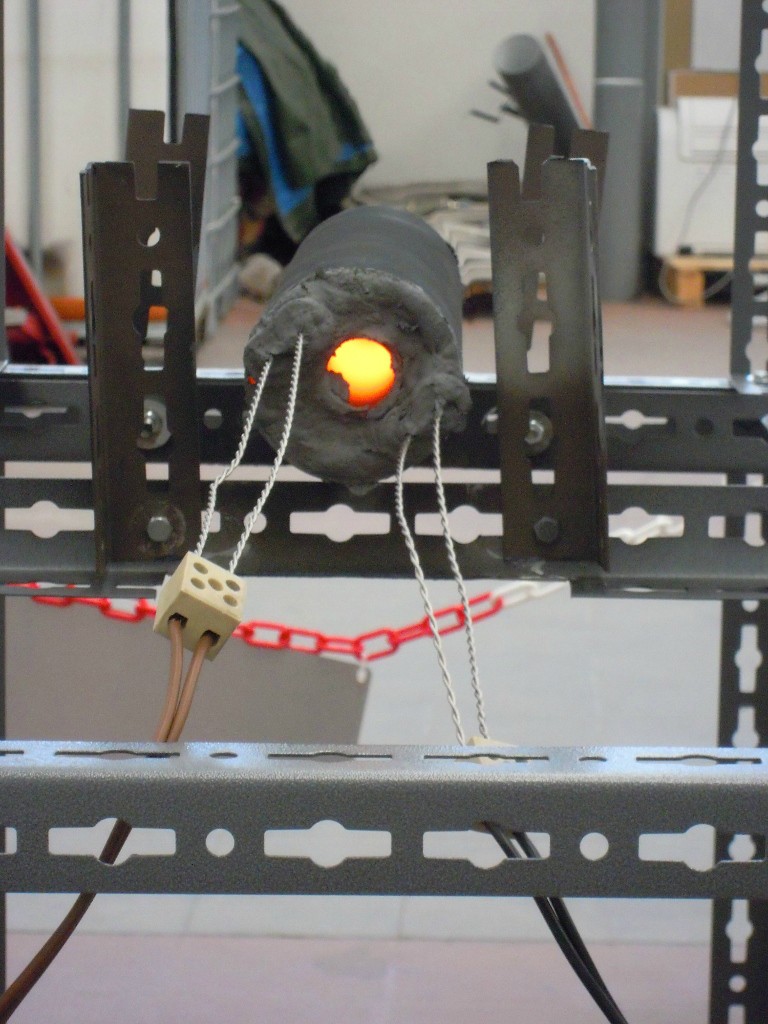
As Ericsson and Pomp summarise it, the report covers four runs: a November 2012 test in which the reactor was destroyed, a December 2012 test, a March 2013 test with all authors present, and an unloaded "dummy" run. The device was treated as a black box. Rossi cited industrial trade secrets, so the testers could measure only electrical power going in and heat coming out. They estimated the output heat by combining infrared-camera images of the reactor surface with convection calculations. According to the comment, the report says the fuel is nickel, hydrogen and a secret catalyst. Its best estimate of the fuel charge was 0.3 g, but most of its calculations used 1 g as a conservative figure.
Was the test independent?
The critics' first objection concerns the test's setting rather than its physics. The Levi report describes its aim as an independent test, and Ericsson and Pomp argue that the circumstances undercut that description in three broad ways.
Prior ties. By the critics' account, Levi, the lead author, had spent roughly 2½ years alongside Rossi in E-Cat testing and promotion, and at least two co-authors, Pettersson and Essén, had already been present at Rossi's earlier demonstrations.
Location and control. The work was done on Rossi's own premises in Italy, and people assigned by Rossi ran the device and its control electronics. In the December case, the critics add, the run was already under way when the investigators arrived.
Device and method. The critics note that more than one type of device was involved, and they read the infrared-camera approach as something dictated by the circumstances rather than a method the team selected on its merits.
For contrast, Ericsson and Pomp sketch what independence would look like to them: the testers choosing the venue, equipment and measurement approach themselves, with the inventor limited to remote guidance. They suggest a measurement agency such as Sweden's SP Technical Research Institute, using heat-pump efficiency protocols.
The input-power problem
Since only energy in and energy out could be measured, the critics treat electrical input as the crucial number. They say the report does not adequately address it. They list what is missing: a full wiring diagram from the mains, covering all three phases and ground; any discussion of DC components, waveforms, or power arriving through ground leads; and access to the control box, which the report itself says was withheld as a trade secret. They also point to an earlier episode reported by the Swedish publication Ny Teknik, in which specialists' input measurements reportedly differed from Rossi's figures by about a factor of 3. They note that this matches the excess claimed for the March run.
Re-modelling the March test
The comment's most concrete contribution is a thermal simulation. Using COMSOL, and taking geometry, materials and coil details from the report, the critics modelled the cylinder heated by its resistors alone: 810 W for 2 minutes, then off for 4 minutes. In the model the coils sit at a 15 mm radius and the surface at 45 mm. Levi et al. had argued that the shape of the surface temperature curve, which differs from a generic resistor's, pointed to an internal reaction. Ericsson and Pomp report that their resistor-only model gives a similar shape, because heat takes time to diffuse through the steel. They do find that matching the observed surface temperature of about 300 degrees Celsius would take roughly three times the reported power during the on phase. They raise undisclosed electrical input as one possible reason, and say the Levi authors did not consider it.
The model raises a second issue. Under pulsed internal heating, surface emission should lag the input. Yet one of the report's plots shows electrical power and surface emission in phase. The critics offer two possible explanations: the curves were aligned for illustration without saying so, or an anomalous source happens to have exactly the phase and amplitude needed to synchronise them. They call the second a remarkable coincidence. They also object to calling the operation "self-sustained" when external power was applied at a 33% duty cycle throughout the run of about 100 hours.
Other gaps by test
- November 2012: According to the critics, the report gives no data for its statement that the run showed huge but unquantified excess heat. They also challenge its reading of five dark surface bands as the shadows of resistor coils. There are 16 coils. Six or seven bright bands are also visible. And with the coil positions unknown, either set of bands could correspond to the coils.
- December 2012: The surface emissivity was not measured. Instead it was assumed to be 1. The December and March COP figures differ by about a factor of 2, and the critics speculate that the unmeasured emissivity may be one contributing factor.
- Dummy run: No data are reported. The run also used continuous power of about 810 W rather than the pulsed pattern of the loaded test, so in the critics' view it is not a proper control.
The energy and radiation argument
Taking the report's energy balance at face value, the critics work out what it implies. With 0.3 g of fuel, the energy density is about 250 kWh/g, against roughly 750 kWh/g for fission reactor fuel. With 1 g it is about a tenth of nuclear fuel. Either figure is far beyond any chemical fuel. The implied power densities are 1.78 to 5.56 MW/kg. These are based on roughly 1667 W over 96 hours in December (160 net kWh) and 534 W over 116 hours in March (62 net kWh). The report itself gives 7 × 10^3 W/kg. For comparison, the critics give about 0.03 MW/kg for light-water reactor fuel. Only nuclear processes are known to reach such densities, and those would normally produce gamma rays, neutrons and transmutation. The critics therefore call the absence of reported radiation measurements a disturbing omission. They note that radiation is mentioned only through a quotation from a Dr Bianchini. They also cite an unpublished 2012 nickel-isotope analysis by Per Andersson and Hans Schöberg of the Swedish Museum of Natural History, which they say found no radioactivity or nickel transmutation.
What the comment does and does not establish
The comment is a critique of the report, not a new experiment. Its single original analysis is the COMSOL model, and the authors say they did not have the resources to model the phase question further. The authors claim that this model, with heating from the resistors alone, reproduces the shape of the surface temperature curve. That addresses the curve shape only. By their own account, matching the absolute temperature would need about three times the reported power, and the in-phase power and emission curves remain unexplained except by coincidence or by the curves having been aligned for illustration. The model therefore leaves the power-level and phase questions open and does not amount to a full conventional explanation of the data. Its central complaint is that the report never set out a null hypothesis of no anomaly, and Ericsson and Pomp conclude that the claim would require new physics in several fields at once. In their words, "Wishful thinking seems to have replaced scientific rigor in some cases." The comment does not show that power was in fact hidden, or that the device produces no excess heat. It documents, for one specific test, the gap described on E-Cat Claims vs. Evidence: The Dossier's Documents and the Absence of Independent Replication, for a claim (see Nickel–Hydrogen Excess Heat Claim) that remains contested within Low-Energy Nuclear Reaction (LENR) research.
Source notes & attribution
- https://arxiv.org/pdf/1306.6364
- http://arxiv.org/abs/1305.3913v2