A small shaped piece of metal sits at the centre of Robert Pavlita’s work. He called these objects psychotronic generators: devices that, he claimed, could accumulate and redirect a biological energy supplied by a person. The name sounds like an electrical machine, but the proposed input was human attention and bodily contact. A useful reading of this dossier starts with that distinction. These are psychotronic claims, not established power-generation technology.
There are several different records to explore. A laboratory preprint describes measurements on activated specimens. A narrative attributed to Stanley Krippner recounts demonstrations and conversations. A declassified intelligence report shows how such accounts entered Cold War assessments. They do not carry the same evidential weight, and their coexistence does not make them independent confirmation of one another.
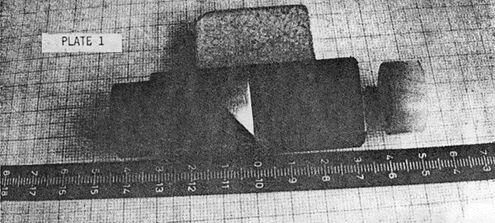
The physical devices
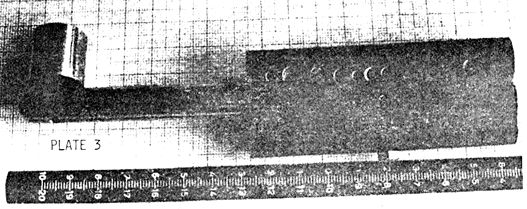
Egely and Vertesy distinguish larger generators from smaller sondes. Their descriptions include steel bodies, chambers or holes, and some brass or plastic parts. Pavlita associated particular forms with particular effects. According to the researchers’ inspection account, the devices they examined had no evident batteries, permanent magnets or electromagnets. This is an attributed inspection result, not a blanket certification of every device ever called a psychotronic generator.
The preprint treats the generators as a way to prepare or activate a specimen before magnetic measurement. Krippner’s narrative discusses a much wider range of supposed effects. Putting both accounts under a single device name can obscure that difference: a laboratory trace and a story about a living organism are different observations requiring different tests.
Where alchemy enters the story
In the narrative attributed to Krippner, Pavlita says that alchemical books suggested forms worth trying. Shape, material and what he called biological rhythm became parts of his account of how the devices worked. This is a reported account of intellectual inspiration. It does not show that an alchemical tradition discovered or established a physical mechanism.
That makes the alchemy reading room a useful adjacent destination. It offers another way to examine ideas about metals, form and nature. Morphic resonance provides a comparison with a different proposed influence involving living systems. Neither connection implies that the mechanisms are the same. The Pleiades dossier belongs only to the wider history of extraordinary narratives; there is no device or experimental lineage established between the two.
What was measured
The experimental source is no longer undated. Its title page identifies it as KFKI-1987-18/E, a preprint from the Central Research Institute for Physics of the Hungarian Academy of Sciences. The colophon dates it to April 1987. The surviving author-hosted scan contains 29 pages. Institutional publication and an ISSN establish its bibliographic identity; neither alone establishes journal peer review or independent replication.
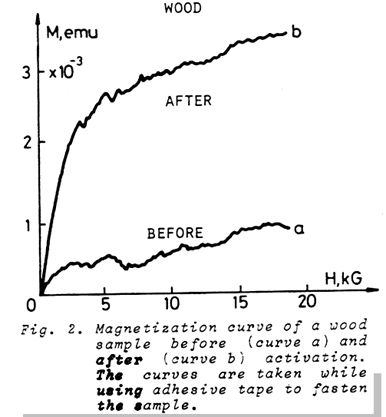
The researchers used vibrating-sample magnetometry to compare specimens’ magnetic response before and after the procedure. Pavlita performed all of the sample activations reported in the paper. The authors describe changes in magnetic properties and a research programme extending over three years. Their own repetition of measurements is a claim of repeatability within that programme, not evidence that a separate team reproduced the effect.
The paper’s discussion of very weak normal human magnetic fields must also be read carefully. The quoted order of magnitude, 10⁻¹⁴ tesla, is background context. It is not a direct measurement of Pavlita’s proposed biological energy. Nor does an unexplained difference in a trace, by itself, identify a new field or its carrier.
What was witnessed, and what was only told
The forum reprint attributed to Krippner describes meetings in 1973 and January 1974. Its numbered demonstrations include movements of a compass and suspended objects. The compass account belongs to that narrative; it should not be silently reassigned to the Egely–Vertesy measurement paper.
The same narrative also repeats stories that Pavlita told the visitor. These include a supposed effect on fruit flies and his daughter’s alleged paralysis and recovery. Reporting what someone said is not witnessing the original event, and neither is a controlled biological or clinical result. This dossier does not treat those stories as medical evidence or as established capabilities of the devices.
A later forum post adds a story about an old film and a personal attempt at replication. The post supplies neither a controlled experimental record nor a verified chain of custody for the film. Its age does not establish that it is in the public domain. It remains a record of a later claim, rather than another successful experiment to add to a tally.
Why the intelligence document matters
The official CIA-hosted file is an eight-page excerpt of a September 1975 report prepared by the U.S. Army Medical Intelligence and Information Agency for the Defense Intelligence Agency. It includes a section on psychotronic generators and later conclusions and forecasts. It is now readable in the source room.
This document establishes that the claims were discussed in an intelligence assessment. It does not establish that intelligence agencies independently verified them. The excerpt contains both dramatic speculation and qualifications. Its significance is historical; its wording still requires critical reading. See The Cold War record: what declassification establishes.
A way through the dossier
Read Pavlita: claims versus evidence for the distinctions between an object, a measurement, an explanation and a replication. Then inspect the original figures and the preserved government document. The useful question is not whether one should accept or dismiss every part of the story together. It is which proposition each source actually supports.
The materials checked for this dossier do not supply an independent, blinded modern replication. That is a statement about this source set, not proof that no relevant work exists anywhere. The proposed biological-energy mechanism remains unestablished here.
Source notes & attribution
- https://rexresearch.com/pavlita/pavlita.htm
- https://egely.hu/wp-content/uploads/2019/03/KFKI-1987-18E.pdf
- https://dreamland-bg.com/index.php?topic=1094.0
- https://www.cia.gov/readingroom/docs/CIA-RDP96-00792R000600350002-2.pdf