Pavlita’s devices are unusually easy to describe and unusually difficult to evaluate as a single claim. A metal object, a witness’s recollection, a magnetization curve and an intelligence assessment can all be genuine records while supporting very different conclusions. This comparison keeps those conclusions separate.
The claims, sorted by what supports them
| Proposition | What this dossier supplies | What does not follow |
|---|---|---|
| Devices called generators and sondes existed | Photographs, physical descriptions and researchers’ inspection accounts | A photograph does not establish biological energy |
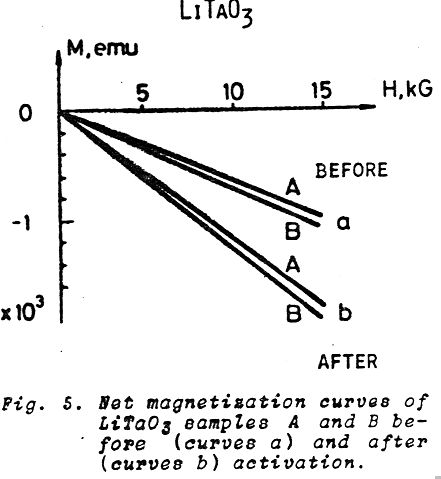
| Activated samples changed their magnetic response | A 1987 preprint reporting before/after magnetometer measurements | Reported differences do not identify their cause |
| A compass or suspended object moved in a demonstration | A narrative attributed to Krippner | An observation is not an isolated mechanism |
| A device harmed insects or restored movement to an arm | Stories Pavlita told, repeated in the narrative; related historical claims in an intelligence report | These are not controlled biological or clinical results |
| Officials took an interest in psychotronics | A declassified report and a Czech archive account | Institutional interest is not experimental validation |
| A separate team reproduced the effect under blinded conditions | No such study is supplied by the checked source set | The absence of a study here is not a universal literature review |
Read a measurement without promoting it into a mechanism
The Egely–Vertesy paper is the dossier’s most instrumentally explicit source. It describes an apparatus and presents curves rather than only a recollection of an impressive event. That is a reason to read it carefully, not a reason to declare the proposed explanation established.
Three questions belong apart. Did the instrument produce different readings? Did the intervention cause those differences? And did a previously unknown biological energy cause them? Evidence sufficient for the first question can be insufficient for the second, and a positive answer to the second would still not settle the third.
Repeatability is not independent replication
The authors describe repeated work over three years. But Pavlita was the activation operator in the reported experimental series. Repeating measurements with the same operator and research team is a different evidential step from reproducing a result with an independent team, independently controlled materials and an analysis chosen before the result is known.
The paper’s method description deserves to be evaluated on its own terms. It should not be rewritten as having no precautions, nor should the authors’ confidence that they excluded error be treated as an external audit. An experimental claim and a researcher’s interpretation of it remain distinct.
An independently persuasive test would need to explain how active and control conditions are compared, who knows which condition applies, how handling and contamination are assessed, how instrument drift is tracked, and how unsuccessful trials enter the analysis. These are questions for evaluating the claim, not a claim that every such control was absent from every historical experiment.
Do not turn the preprint into a journal endorsement
The recovered title page explicitly says preprint. Its report number is KFKI-1987-18/E; its colophon dates publication to April 1987. The ISSN identifies a publication series. It does not certify the paper as peer reviewed. Equally, calling a work a preprint does not refute its measurements. Bibliographic status helps establish what the object is; experimental scrutiny addresses what it shows.
Calling the paper “peer-equivalent” would assign a status that the recovered record does not establish. The publication can be identified precisely without assigning an unsupported quality seal.
Witnessed demonstrations and secondhand stories
Krippner’s account includes events he describes attending and events Pavlita described to him. This is a distinction within one narrative, not merely a ranking between two documents. The compass demonstration is presented as attended. The fruit-fly and arm-recovery stories are relayed claims about other events. Combining them into a list of eyewitness-verified effects would change the source’s meaning.
The later forum story about a film and a replication attempt is weaker as an experimental record. It does not establish a protocol, comparison group or independently inspectable measurements. The narrative can be documented without elevating it into a result.
What the government record adds
The September 1975 report is evidence of contemporary intelligence analysis. It repeats claims, considers possible implications, and sometimes questions them. It predates the 1987 preprint and cannot serve as a replication of that later experimental series. Its formal appearance and release stamps do not change that chronology.
Read The Cold War record for the report’s qualifications and missing pages. Return to the device overview for the physical objects and source history. The appropriate conclusion here is limited: there is a documented experimental claim, alongside witness and historical accounts; the proposed mechanism is not independently established by this collection.
Source notes & attribution
- https://rexresearch.com/pavlita/pavlita.htm
- https://egely.hu/wp-content/uploads/2019/03/KFKI-1987-18E.pdf
- https://dreamland-bg.com/index.php?topic=1094.0
- https://www.cia.gov/readingroom/docs/CIA-RDP96-00792R000600350002-2.pdf