Wikipedia's biography of John Ernst Worrell Keely (September 3, 1837 – November 18, 1898) is a chronology built almost entirely from contemporary New York Times reports. It calls him a fraudster in its first sentence and says his claims are now generally regarded as pseudoscientific. Its value for this dossier is that it lays out, in dated order, the occasions on which someone tried to find out what drove Keely's apparatus, and what happened each time. This page follows that thread and leaves the rest of the biography aside.
Unknown author · Public domain
What did Keely say drove his machines?
The biography reports that in 1872 Keely invited scientists to his laboratory at 1422 North Twentieth Street, Philadelphia, to see a machine he said ran on a previously unknown force, and that the Keely Motor Company was formed in New York within a few months with a capital of $5,000,000. His account of the force changed over time. In an 1884 statement quoted from the New York Times, he said he took water and air and, by vibration, freed from them an inter-atomic ether roughly four times lighter than hydrogen. At the stockholders' meeting of December 14, 1887, his written report announced that he had given up etheric force for an unnamed one based on what he called vibratory sympathy.
The apparatus as described in an 1875 Times report was a generator about 3 ft long, made of Austrian gunmetal and holding 10 or 12 gallons of water, joined by a 1 in pipe to a receiver some 40 in long and 6 in across. Keely claimed it could reach 2,000 psi in 5 seconds by mechanical means alone.
What was actually shown, and what did sceptical witnesses ask for?
Four episodes in the biography have the same shape: a striking display, then a simple check that was proposed and not carried out.
November 10, 1874. Keely blew into a nozzle for half a minute, poured in five gallons of tap water, and after adjustments a gauge read 10,000 psi. The biography says the witnesses were impressed enough to form a stock company, buy patent rights for the six New England states and pay $50,000 in cash.
Sandy Hook, September 20, 1884. Before government officials, Keely fired lead balls of about 5 oz from a gun of 1.25 in bore, fed from an iron receiver 4.5 ft long. Measured velocities were 482, 492 and 523 ft/s. He said he had used 7,000 psi. Lieutenant E.L. Zalinski, an army engineer then developing a pneumatic dynamite gun, told the company's president, A.R. Edey, that he could do as much or more with compressed air on the same apparatus; the offer was not taken up. At Keely's workshop that November, Zalinski proposed that Keely empty a large reservoir and refill it from his generator. Keely declined, saying it would take two hours. When Keely said he had broken all his gauges at 50,000 psi, Zalinski offered one of his own rated to 10,000 psi, and reported the reply: "I do not believe in pressure gauges, anyhow."
June 6, 1885. About 20 witnesses saw weights lifted and a rotating iron globe saw wood. Keely would not open either globe. He said one engine had run for 40 days; asked by a reporter to let the globe spin for half an hour, he ran it for under 15 minutes with steadily falling power.
November 1895. At Clara Bloomfield Moore's invitation, Addison B. Burk of the Spring Garden Institute and the electrical engineer E. Alexander Scott made several visits, the first on November 9. Citing Ord-Hume, the biography says they concluded that compressed air had been used in nearly all the experiments, delivered in the case of weights rising and falling in sealed flasks through a thin tube that Keely had told them was solid wire. Wentworth Lascelles Scott of London, after a month's examination, told the Franklin Institute the opposite: that Keely had shown him an unknown force. Moore then proposed cutting the disputed wire. The biography says Keely refused and that she reduced his monthly payment, though it gives no citation for that outcome.
Did the courts ever force a disclosure?
No. Two suits came close.
The stockholders' suit followed a meeting of December 14, 1881, at which a report complained of Keely's secrecy. Keely filed a demurrer on January 20, 1882; Judge Pierce overruled it on April 1 and ordered him to make his process known. In June a committee chose William Boekel of Philadelphia to be instructed. Boekel told the annual meeting of December 13, 1882, that Keely had discovered all he claimed, but a Times reporter later found that Boekel had not yet been given the secret.
The second suit was brought by Bennett C. Wilson, who claimed rights under agreements going back to 1863 and assignments of August 1869. An order of April 7, 1888, named four experts to inspect the motor within 30 days, later extended to 60. Keely did not comply and was committed to Moyamensing Prison for contempt on November 17, 1888. He was bailed on November 20, and on January 28, 1889, the Supreme Court of Pennsylvania reversed the committal, holding the order premature.
What did the 1899 investigation find?
Keely died of pneumonia on November 18, 1898. On January 19, 1899, the Philadelphia Press published an illustrated account of a week-long examination of his workshop. The biography, relying on the next day's New York Times, names those who assisted: consulting engineer Carl Hering; Arthur W. Goodspeed and Lightner Witmer of the University of Pennsylvania; and Dr M. G. Miller, who supervised the digging. Clarence B. Moore, an electrical engineer and Mrs Moore's son, observed.
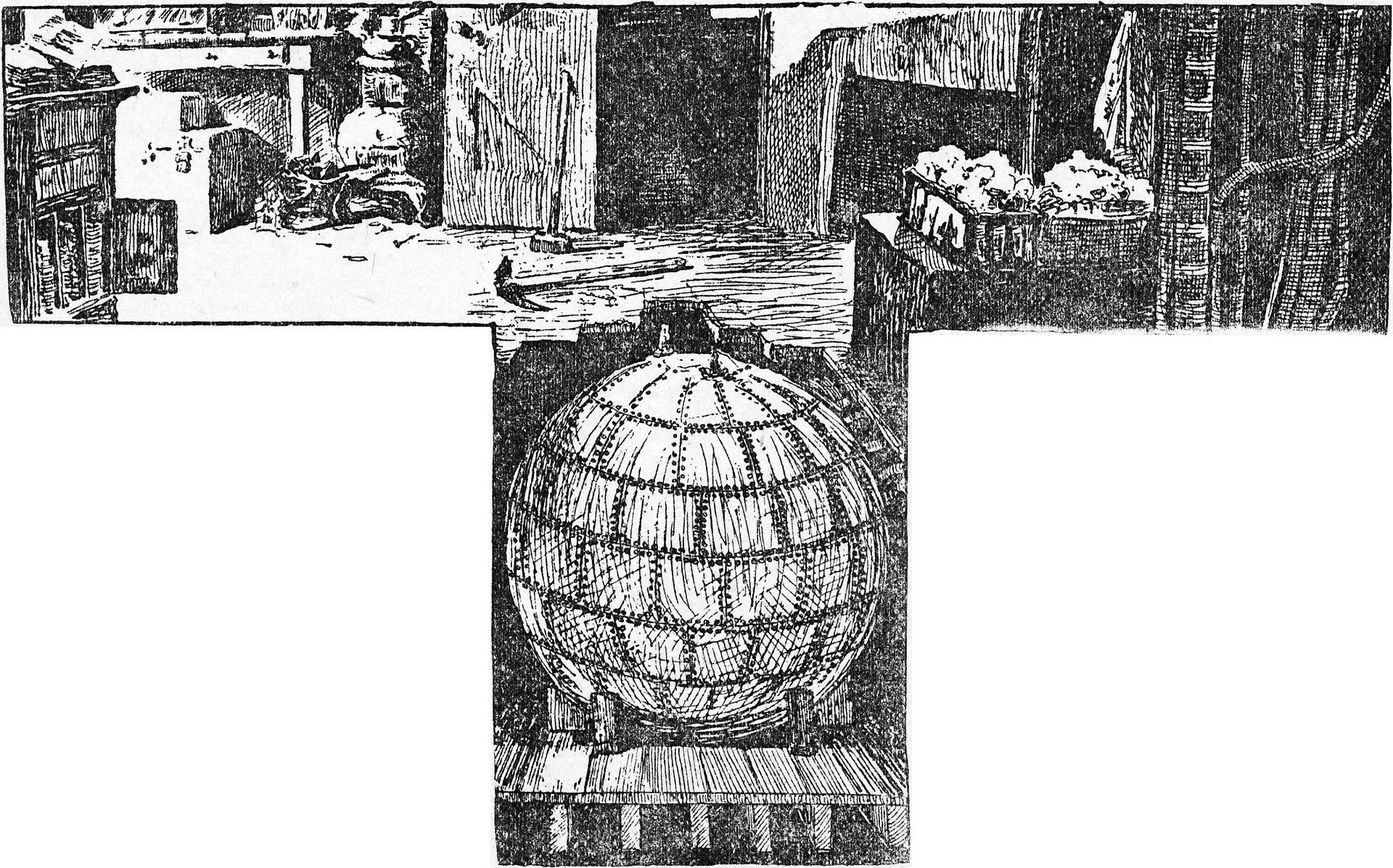
Floors were lifted and a brick wall removed. The reported finds were belts inside the wall leading to a silent water motor two floors below, a three-ton sphere for compressed air in the basement, and tubes concealed in walls, ceilings and beams. The work was photographed, and the scientists gave signed statements. The Press called the motor "a delusion and deception".
What does this establish, and what does it leave open?
The wording of the experts, as reported, is more cautious than the newspaper's. Hering and Goodspeed are said to have thought the tubing and sphere pointed to ordinary forces and possible deception; Hering wrote that Keely had probably deceived and that he was satisfied compressed air had powered the demonstrations. This is an inference from equipment found after Keely's death. Nobody is reported to have watched the sphere drive a demonstration.
The company contested the finding. On January 25, 1899, its president, B. L. Ackerman, stated that Keely had discarded the tubes years earlier, had used only solid wires since 1887, and that a concealed electric wire was left over from a burglar alarm. That defence sits awkwardly beside Burk and Scott's 1895 report of a tube passed off as wire.
Thomas Burton Kinraide of Boston, named as Keely's successor, received 20 packing cases of apparatus in January 1899 and gave the work up by May 6, saying he had reached no conclusion about fraud.
The biography is a secondary summary. It reproduces neither the Press article nor the signed statements, and its account of the 1895 visits rests on a single later book.
How this connects to the rest of the dossier
Clara Bloomfield Moore's Keely and His Discoveries: The 1882 Stockholder Letter and the Keely Motor Company's Finances gives the 1882 suit from the side of Keely's advocate, and reprints an 1886 editorial dismissing hidden compressed-air pipes as a frivolous suspicion; the 1899 report is the later attempt to test it. That page's anonymous stockholder dates the company to 1874, where the biography places its formation within months of the 1872 demonstration. The Hydro Vacuo Engine Specification Bearing John W. Keely's Name: Vacuum, Water Pressure and Eleven Claims describes an engine design, bearing Keely's name, in which compressed air is an openly declared working part; the biography lists a "hydro-pneumatic-pulsating-vacu-engine" among his changing names for his apparatus but does not discuss that specification.
Further reading
- Keely in the New York Times, 1881–1899: A Mocking Editorial, a Sworn Answer, the Sandy Hook Interview and the Press Exposure — the Times texts behind several episodes here: the 1881 editorial joking about a cellar key, Keely's sworn 1882 admission that the motor was not yet practical, his own figures after Sandy Hook, and Hering's and Witmer's signed statements of 1899.
- John Ernst Worrell Keely (1837–1898): Changing Names for a Force, Private Patronage and Repeatedly Postponed Engines — the parts of the biography set aside here: Keely's early life, the successive names he gave his force, Moore's payments, the run of postponed engine deadlines from 1883 to 1895, and what happened to the apparatus after his death.
Source notes & attribution
- https://en.wikipedia.org/wiki/John_Ernst_Worrell_Keely