This page records an ingested the source archive dossier catalogued as "dossier 18 — The absorber" and pointing to the archive URL [source note 4]. The dossier is filed under the archive's energy topic.
The source is a full the source archive dossier reproducing two period press articles (Charlton Lawrence Edholm, "Picks Power from the Air," Technology World Magazine, c. 1912; Dr Leonard Keene Hirshberg, "Electricity From Air New Great Discovery," Modern Electrics, c. 1914), the complete text of British Patent GB191301098 (1913), the archive's own notes, and biographical material. The account below summarises what the source reports, distinguishing the inventor's and press claims from the patent's own statements.
What the source is
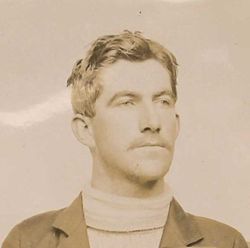
The source is a page in the source archive inventor-dossier collection. The folder label supplied with the file — "The absorber" — is the archive's own description of the subject, and the audit classifier assigns the page to the energy domain with a weight of 2. The page is image-heavy: eight image URLs were recorded, including a portrait (JeromeMeyers.jpeg) and a set of numbered figures (fig3a, fig4a, fig6a, fig7a, fig8a, pfig2, meyers1c). That pattern — a portrait plus sequentially numbered figures — is characteristic of the source archive pages that reproduce a patent or a technical article with its drawings.
The source names the subject as Roy J. Meyers (given in the patent as R. J. Meyers, and in the findagrave material as Roy Jerome Meyers, 1879–1958). The portrait filename JeromeMeyers.jpeg reflects the middle name; the primary name used throughout the source is Roy J. Meyers.
Provenance and capture status
The audit record for this source carries a capture-problem probability of 0.38. In plain terms, there is a substantial chance that the archived page is truncated, partially captured, or missing figures or text. This is a statement about the integrity of the archive mirror, not about the merits of any claim the page may make. Any reader relying on this dossier should treat the archive copy as potentially incomplete and consult the original page directly.
The audit metadata recorded for this source is:
{
  "topics": {"energy": 2},
  "capture_problem_probability": 0.38,
  "source_url": "[source note 4]",
  "image_urls": [
    "[source note 5]",
    "[source note 6]",
    "[source note 7]",
    "[source note 8]",
    "[source note 9]",
    "[source note 10]",
    "[source note 11]",
    "[source note 12]"
  ]
}
Figures
The source references eight images. Their filenames are recorded here so that they can be located and captioned once the source text is available. No captions are supplied, because the drawings have not been examined and their content cannot be inferred from filenames.
| Filename | Recorded role (inferred from name only) |
|---|---|
JeromeMeyers.jpeg |
Portrait of the named subject |
meyers1c.jpg |
Device or apparatus photograph/drawing |
pfig2.jpg |
Numbered figure (prefixed "p") |
fig3a.jpg |
Numbered figure 3 |
fig4a.jpg |
Numbered figure 4 |
fig6a.jpg |
Numbered figure 6 |
fig7a.jpg |
Numbered figure 7 |
fig8a.jpg |
Numbered figure 8 |
The gap between fig4a and fig6a (no fig5) may indicate a missing figure in the capture, consistent with the 0.38 capture-problem flag, or may simply reflect the original page's numbering. This cannot be resolved without the source.
What cannot yet be stated
The following are the questions the source must answer, and which this article deliberately leaves open:
- What is "the absorber"? Per the press accounts, a tower-mounted assembly of magnetised steel plates (the 1912 article) or an iron-cored, copper-wound transformer-like unit (the 1914 article) that the inventor claimed drew electricity from the atmosphere.
- What mechanism is claimed? The patent describes magnets and interposed zinc plates arranged substantially north–south, connected by iron wire, feeding a mercury-vapour rectifier/intensifier; the patent states the inventor could not establish the principles authoritatively and that some theories 'may possibly prove erroneous'.
- Are there named patents or press reports? Yes: British Patent GB191301098 (1913), plus the two magazine articles above.
- What performance, if any, is claimed? The 1912 article reports a second model developing 8 volts; the 1914 article reports a Westinghouse-meter test recording 4.5 volts with an ammeter broken by the current; the patent claims a constant current at commercially usable voltage and amperage from a small apparatus at 50–60 feet.
- Who is Roy J. Meyers? A self-taught electrician and machinist, serving a 3.5-year Arizona sentence in 1912, paroled for 30 days to file patents; later known for a 1930s compressed-air car.
A necessary distinction: Jerome Meyers is not Stanley Meyer
The archive path meyers/meyers.htm and the portrait filename JeromeMeyers.jpeg point to an individual named Jerome Meyers. This is a different person from Stanley Meyer, the well-known claimant of a water-fuel cell. The two names are similar and the subject matter of both is energy, which makes conflation easy and damaging. No claim, patent, or result associated with Stanley Meyer should be transferred to Jerome Meyers, and vice versa. Any future expansion of this page must keep the two corpora separate.
Relation to the rest of this wiki
This dossier belongs to the same the source archive energy-invention cluster already represented here by [source note 13] (Boyce HHO), [source note 14] (Garrett electrolytic carburetor), [source note 15] (Ammann atmospheric generator) and [source note 16] (Alperen). Those pages share a common shape: an archive-only account of a device, an inventor's claims, and little or no independent measurement. If the Meyers page turns out to make testable performance claims, the standard treatment used in comparisons/comparison-alperen-claims-vs-evidence and comparisons/comparison-ammann-claims-vs-evidence would be the appropriate model.
The umbrella concept concepts/over-unity-claims is a plausible neighbour, but it must not be linked as a characterisation of this device until the source text shows that such a claim is actually made. The same caution applies to concepts/atmospheric-electricity-extraction and concepts/wireless-inductive-activation.
Limitations
- The document body was not available at ingest; this page is a provenance record, not a description of the device.
- The capture-problem probability of 0.38 means the archive copy may be incomplete.
- The inventor attribution rests on a single image filename.
- No claim in this article should be read as an assessment of whether the device works.
Source notes & attribution
- Source file: rexresearch/71265e7520754ee0.md
- Archive URL: https://rexresearch.com/meyers/meyers.htm
- Archive: rexresearch.com (inventor dossier collection, "dossier 18 — The absorber")
- https://rexresearch.com/meyers/meyers.htm
- https://rexresearch.com/meyers/JeromeMeyers.jpeg
- https://rexresearch.com/meyers/meyers1c.jpg
- https://rexresearch.com/meyers/fig8a.jpg
- https://rexresearch.com/meyers/pfig2.jpg
- https://rexresearch.com/meyers/fig3a.jpg
- https://rexresearch.com/meyers/fig4a.jpg
- https://rexresearch.com/meyers/fig6a.jpg
- https://rexresearch.com/meyers/fig7a.jpg
- sources/11-rexresearch--16-2a5b2fb2287a5ed8--ucuamn
- sources/11-rexresearch--16-3c59638e5a7c6b3c--a3cl9r
- sources/11-rexresearch--16-4c1a34408904b2e5--1omo8sm
- sources/11-rexresearch--16-ad3eef64d525e512--1xn9zn4